
Boat Life as a Couple
The Dream, the Pressure, and the Truth
From the outside, it’s easy to understand the appeal. You imagine sailing into beautiful anchorages, morning coffee in the cockpit, sunset swims, shared adventure, and the kind of freedom most people only dream about. And to be fair, those parts are real. There are days out here that feel so beautiful and surreal you can hardly believe this is your actual life.
But living on a sailboat together is not just a more scenic version of regular life. It is its own environment entirely, and one that has a way of bringing everything to the surface.
A friend of ours once said that a boat is like a crucible for the problems you already had, and that has always stuck with me. Not because boat life is negative, but because it’s true. A crucible doesn’t create something from nothing. It applies heat. It strips away distractions and convenience and space to hide, until what was already there becomes much easier to see.
That’s what boat life can do to a relationship.
It can deepen what is already strong AND it can expose what has been neglected. It can make a solid partnership even more resilient, and it can also make existing cracks much harder to ignore.
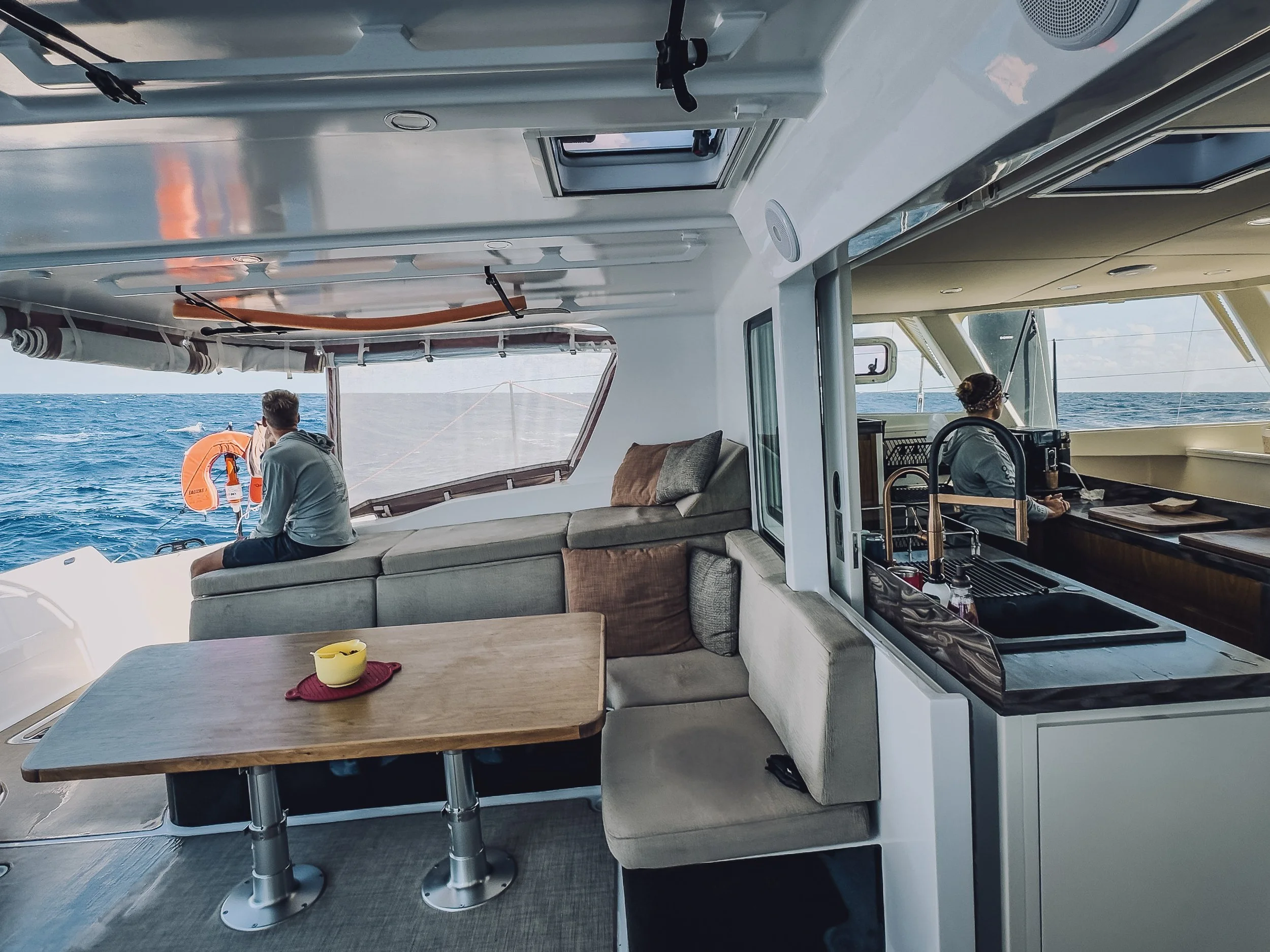
On land, most couples have buffers built into daily life. You leave for work, run errands, see other people, spend time in different rooms, get in the car and drive somewhere if you need to cool off. There are natural breaks in the day. There are outlets. There is space. On a boat, especially when you are living aboard full time or out on a multi-day passage, many of those buffers disappear. You are in the same space for work, rest, problem-solving, stress, routine, and adventure. Your home is also your transportation, your shelter, your project, and sometimes your biggest source of uncertainty all at once.
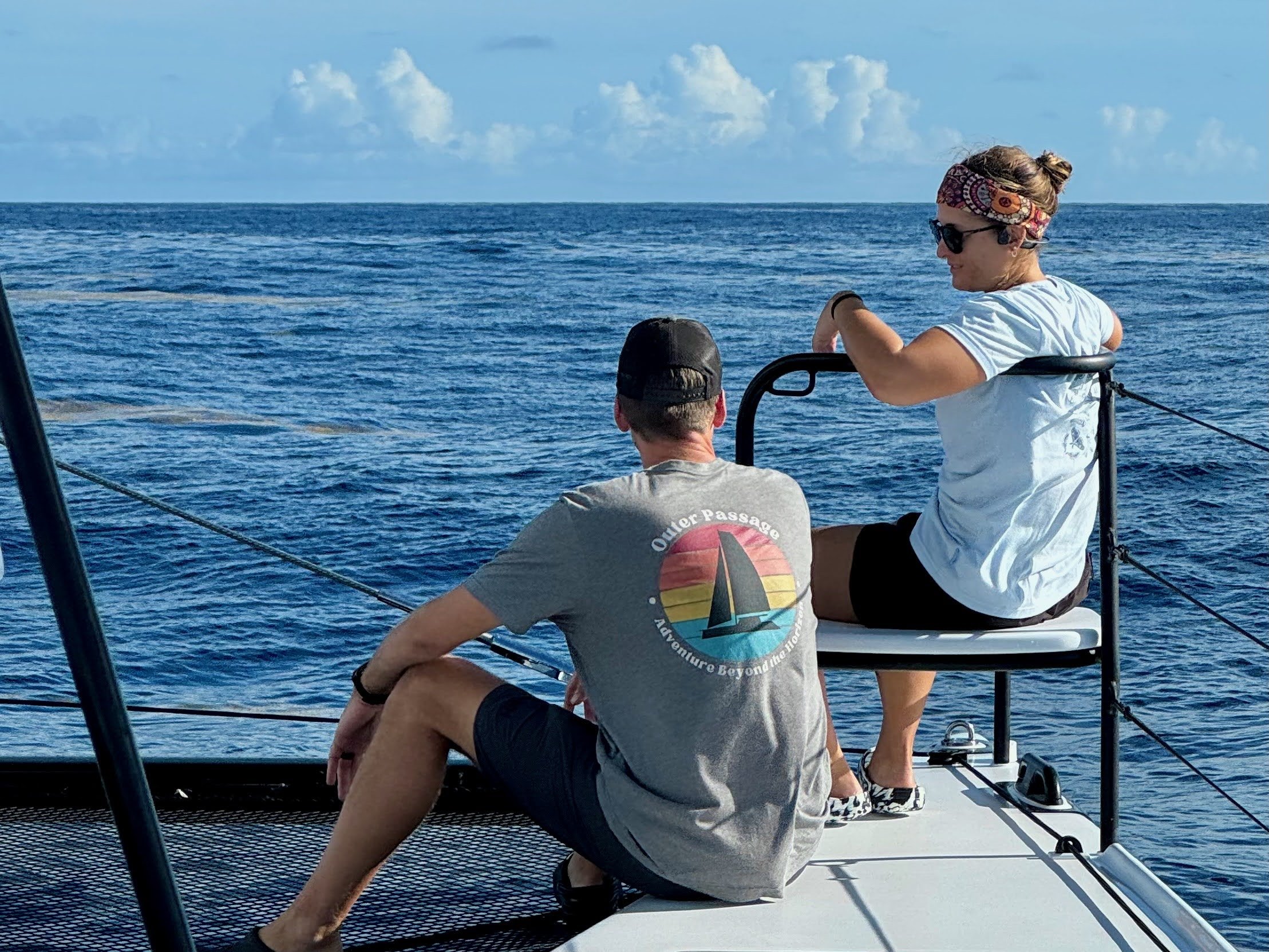
That kind of closeness can be really beautiful, but it can also be intense.
You see each other more fully out here. Not just the best parts, but the tired parts, the stressed parts, the irritable parts, the anxious parts. You see what your partner looks like when they are seasick, sleep-deprived, overwhelmed, or trying to make a hard decision in less-than-ideal conditions. And they see the same in you. There is much less room for polished versions of ourselves in this life. The ocean has a way of stripping things down.
And then there’s the pressure that is simply built into the lifestyle. Even in beautiful places, there is often a quiet hum of responsibility running in the background. Weather is always part of the conversation. So is maintenance. So are provisioning, timing, budgets, navigation, anchoring, route decisions, repairs, and all the small but necessary tasks that keep life moving. Even a simple day can carry a lot of mental load. When your home can break, drag, leak, clog, or stop working in some inconvenient new way, the background stress is real.
That stress does not mean the life is bad. It just means it is real, and if you are not honest about that, it becomes easy to feel confused by your own reactions. People assume that if you’re in a beautiful anchorage, you should feel carefree all the time. But being somewhere beautiful does not erase the realities of managing a boat or a relationship. Paradise still comes with responsibilities.
One of the biggest things boat life seems to reveal is how a couple handles decision-making together. On land, many decisions are low stakes. On a boat, some of them carry real weight. Do we leave now or wait another day? Is this weather window good enough? Is this anchorage comfortable enough to stay put? Are we pushing too hard, or being too cautious? Different risk tolerances can surface quickly out here, and if one person tends to dominate decisions while the other quietly goes along, that dynamic can become more pronounced over time.
The same is true with competence and responsibility. It’s easy, especially at first, for one person to become the default problem-solver or decision-maker simply because they have more experience or confidence. Sometimes that works in the short term. But long term, it can create imbalance if you’re not paying attention. One person can start carrying too much of the mental load while the other feels less capable, less included, or less confident in their role aboard. The strongest couples we know are not necessarily the ones where both people do everything equally at all times, but the ones who actively work to share knowledge, communicate clearly, and keep growing together.
Conflict feels different on a boat too. On land, space is often part of how couples regulate themselves. You go for a walk, take a drive, leave the room, sleep on it. At sea, especially underway, those options may not exist. You may still have watches to stand, sails to change, repairs to make, or decisions to carry through together even when you are frustrated with one another. In those moments, the immediate goal has to come first, safely sailing the boat, solving the problem at hand, doing what needs to be done. Setting emotion aside is not always easy, but it can be clarifying. It teaches you quickly that the priority is not winning the argument, but working together well enough to take care of the boat and each other. Timing, tone, and self-awareness stop being nice relationship skills to have and become essential ones.
And yet, for all the pressure and intensity, there is something incredibly meaningful about the honesty of this life. Boat life has a way of stripping away illusion. You learn who your partner really is when things are hard. They learn the same about you. You build trust not through grand statements, but through repetition. Through small moments of competence, patience, humor, sacrifice, and showing up. Through night watches, anchor checks, long passages, problem-solving, and the ordinary rhythm of taking care of a life together that asks a lot from both of you.

That, to me, is one of the most beautiful parts of it.
Boat life as a couple is not beautiful because it is easy. It’s beautiful because it asks something of you and your relationship. It asks you to communicate better, to be more honest, to share responsibility, to stay flexible, and to choose each other again and again in an environment that can be both inspiring and demanding. It asks you to be a team in a very real way.
And just to say it clearly, because I know how these things can read: Darren and I are good. I am not writing this from some dramatic place. I am writing it because I think people deserve a more honest version of the dream. The dream is real. It really is special sometimes. But the challenges are real too, and pretending otherwise does no one any favors.
Boat life doesn’t create relationship problems out of nowhere. More often, it magnifies what was already there. That can be uncomfortable, but it can also be incredibly valuable. Because if you are willing to face what it reveals, this life can strengthen a relationship in ways that are hard to replicate anywhere else.
It won’t make things perfect. But it will make them clear.