
The Honest Monohull vs Catamaran Conversation
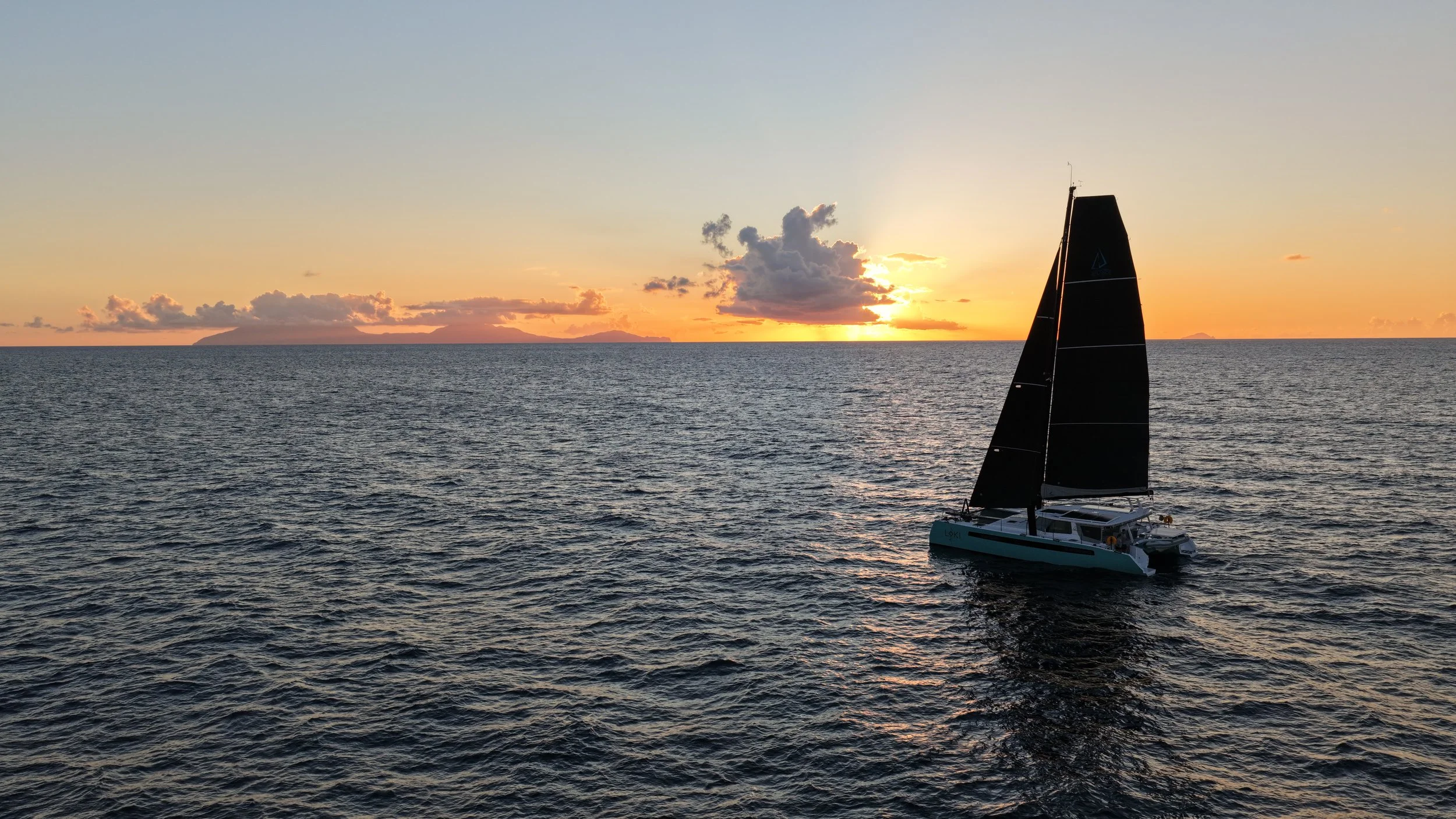
If you hang around sailors long enough, you’ll hear the same debate on repeat: monohull vs catamaran: which one is “better”?
Most of the time, it turns into the argument about speed, looks, and what makes a “real sailor.” And honestly, I get it. Sailboats aren’t just boats, they’re an identity, dreams, and the way we picture our future of life on the water.
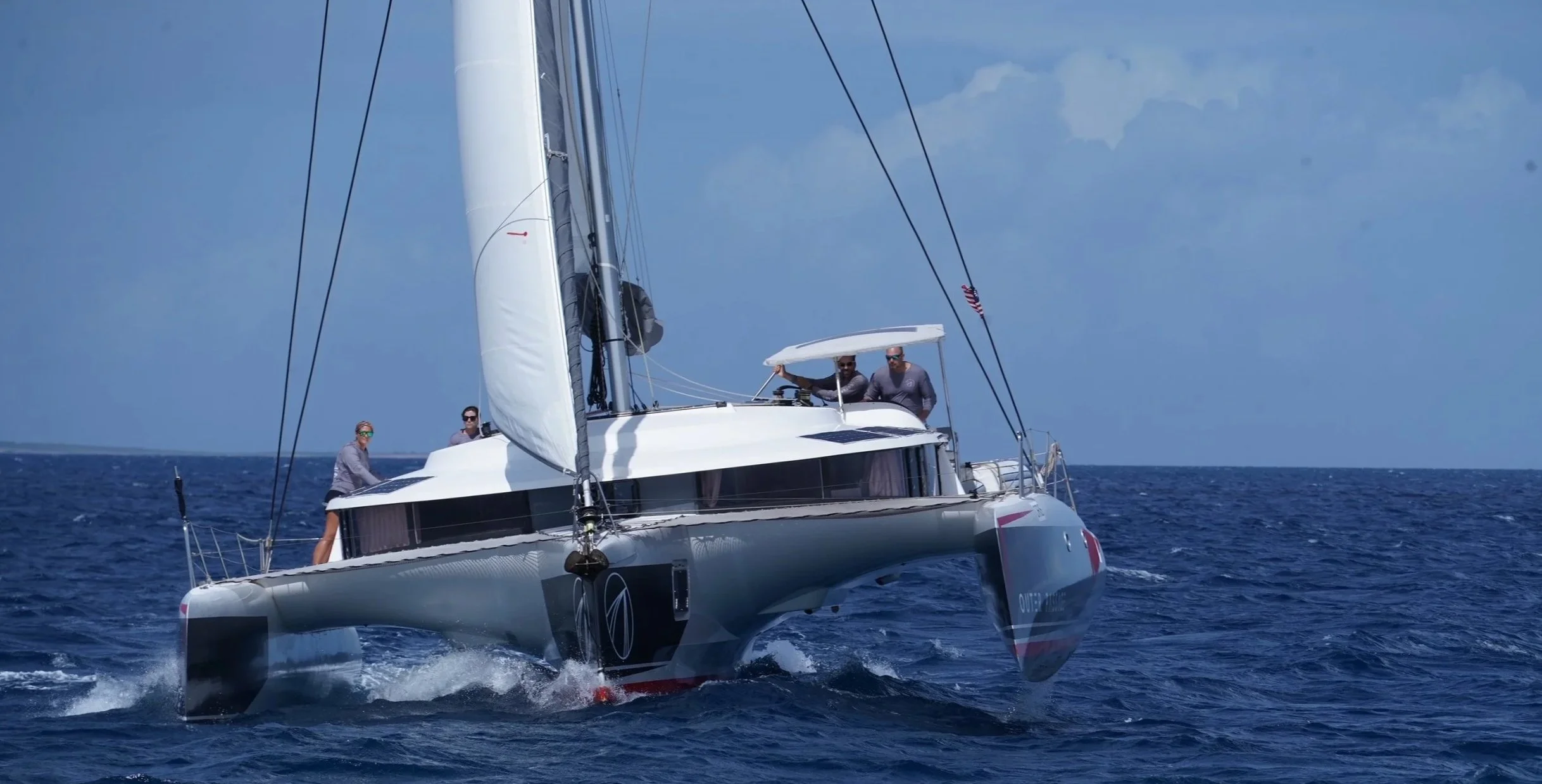
But after living aboard a monohull for years, stepping into the multihull world on a trimaran, and now running Outer Passage on performance catamarans, we’ve come to a pretty simple conclusion:
The biggest change isn’t the boat. It’s your life onboard, at sea and at anchor.
One of our crews recently hosted a webinar on the shift from one hull to two, and it reminded me why I feel so strongly about this topic. Not because there’s one “best” boat for everyone, because there isn’t, but because so many people are making this decision based on internet opinions instead of real-world use and experience.
So here’s my honest take, from the cockpit, not the comment section:
we believe a well-designed catamaran is the best overall platform, not because it’s trendy, but because it supports the life most cruisers actually live.
That said… let’s be fair. Different hulls shine in different missions. It all depends on how and where you cruise.
If your heart lives upwind, tight tacks, that “knife slicing through the sea” feeling, the boat talking to you through heel and feedback, a monohull will always have a special kind of magic. But if your vision of cruising includes daily life, cooking real meals, sleeping well, moving around safely, staying functional offshore, and enjoying the places you anchor, that’s where catamarans often win.
And our opinion, after living aboard all three: catamarans are the best overall world-cruising platform… if you choose the right design and sail it with good habits…I’ll get to the “if.”

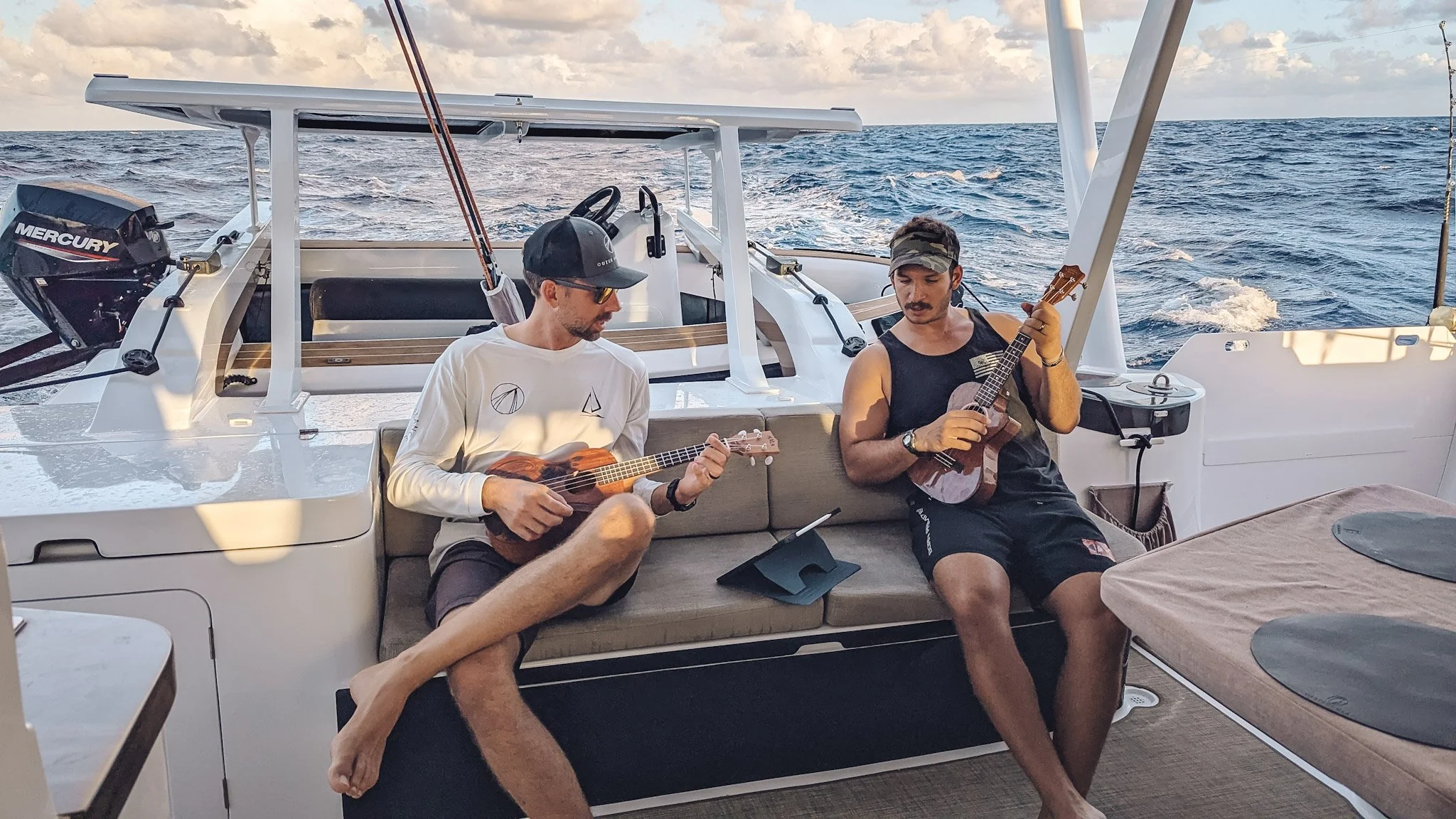


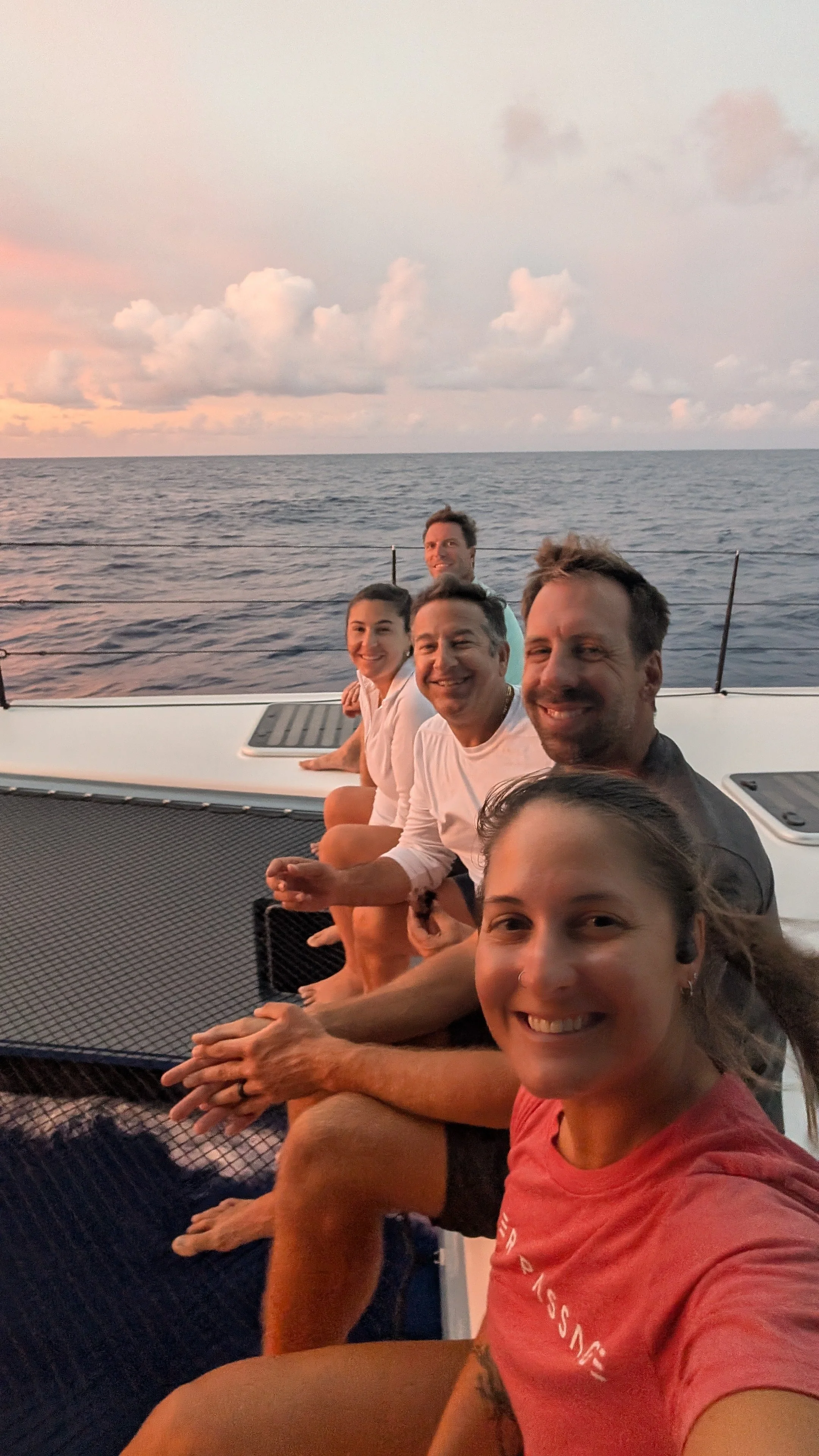
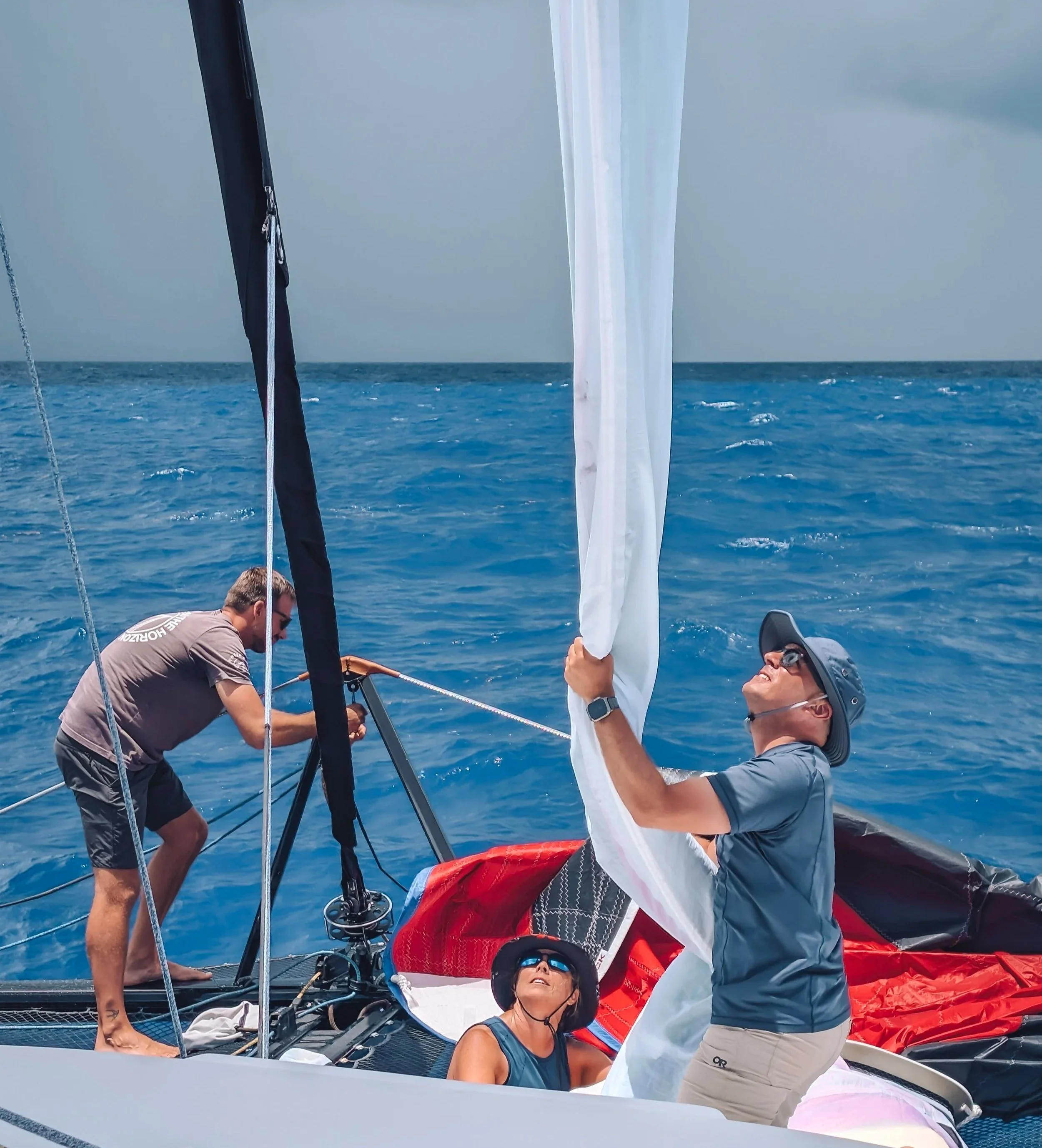
The biggest change isn’t speed, it’s how your body feels on passage
Monohulls teach you grit. They teach you timing. They teach you how to cook while braced against a counter, how to sleep on a slant, how to move like you’re always one wave away from falling across the room.
And I’m genuinely grateful for that foundation. It made us competent, conservative in the right ways and it built instincts. But on long passages, that constant physical effort adds up, especially for couples, families, and short-handed crews. And that fatigue is where mistakes sneak in. When your body isn’t fighting the boat all day, you make better decisions.
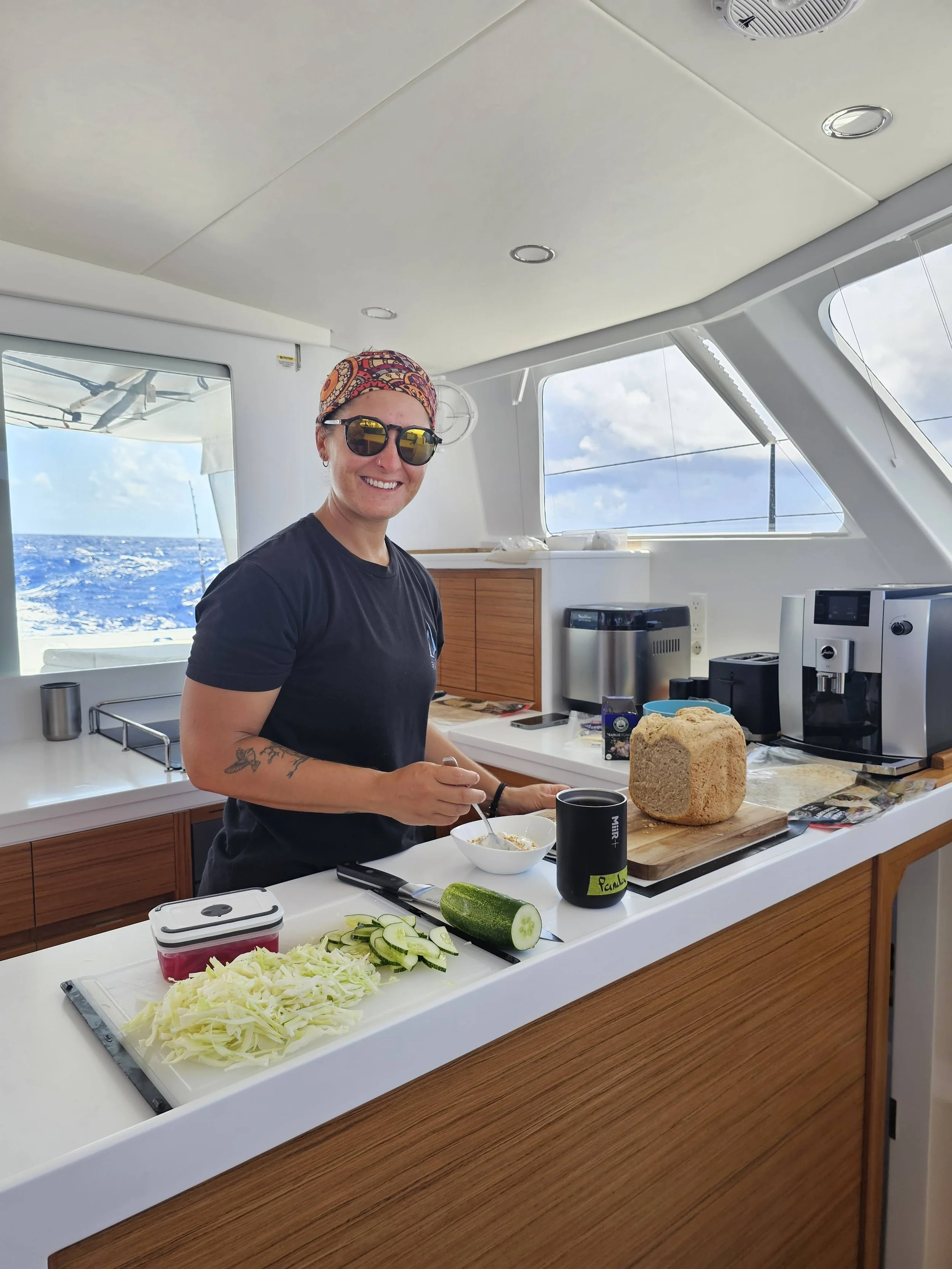
On a catamaran, you’re not spending hours bracing against heel. You can cook without wedging yourself into a corner. You can sleep without being launched across the berth. You can move around upright, get your steps in and still feel like a human on day five.
And we see it constantly with our guests offshore: when people aren’t exhausted just from simply surviving onboard, they learn faster, sleep better, and actually enjoy the passage. And that changes everything, because a crew that’s functioning is a crew that can sail well.
The upwind Reality:
Here’s where monohulls deserve real respect:
If you love sailing to weather, monohulls usually feel better. They talk to you. They give you feedback. They make you feel connected to the water in a way that’s hard to replicate. But here’s the cruising truth nobody posts about:
Most cruisers spend the majority of their time reaching, running, or sitting at anchor and when they do go offshore, they’re often choosing weather windows that allow for those points of sail.
So if your real life is more “tradewinds and anchorages” than “beating into it,” then the definition of “best” changes. It becomes less about the perfect upwind angle and more about the platform that supports your day-to-day life.
Also, the notion that “catamarans don’t go upwind” is one of those statements that’s both true and not true. Traditional cruising cats can be miserable to weather, but modern performance cats can surprise you. Not by pinching like a racing monohull, but by making strong windward progress, less leeway, and in some cases, faster.
The point isn’t that monos are “better upwind.” The point is: the gap depends on the boat design, and most cruisers aren’t living their best life upwind anyway.
Speed isn’t about bragging rights, it’s about options
Yes, catamarans can be faster in many conditions, especially off the wind, but the bigger advantage isn’t always “look how many knots we did,” it’s that speed buys options. It can widen weather windows or help you position ahead of a particularly strong front. It can reduce the number of nights you need to manage or simply survive offshore. It can turn a passage from “how long can we endure this” into “how well can we sail this.”
And in our own experience on performance multihulls, the other benefit is that we often motor 20%-30% less than we did on our monohull. That’s not a guarantee for every cat, in every sea state, but it’s been true often enough that it changes how we plan our passages.
And then there’s the flip side…
Cats are comfortable…until you ignore physics
Two things are true at the same time:
Catamarans can be incredibly comfortable offshore and at anchor.
Bad sailing habits have bigger consequences.
A monohull talks to you through heel and constant feedback. For a lot of sailors, that heel is an early warning system, you can feel the boat loading up before you even look at the rig.
A catamaran can be quieter in that way. It stays flatter, and that “quiet” can trick people, especially sailors coming from monohulls, into carrying too much sail for too long. And here’s the part we can’t gloss over:
Yes, catamarans can capsize.
They’re as stable rightside up as they are upside down. And unlike most keelboats, they generally don’t self-right. That doesn’t mean they’re “unsafe.” It means the safety factor is different. The margin comes from prevention, not recovery.
That’s why we don’t love the phrase “cats are easier.” They’re not. They’re different. And they require you to be a lot more attentive. And that safety margin means reefing earlier than your ego wants to, conservative squall strategy, smart weather routing (don’t put yourself in bad angles with big seas), active load management and good systems and habits offshore (jacklines, night protocols, crew communication, consistent watch routines).
When you sail a catamaran well, it’s an incredibly capable platform. When you sail it too casually, late reefs, overloaded, chasing speed at the expense of seamanship, you’re playing a dangerous game.
And that leads into three topics every multihull owner considers: bridgedeck clearance, weight, and safety.

Bridgedeck clearance and why it matters (a lot)
If you’ve heard the phrase “bridgedeck slamming,” you’re already cringing.
Here’s the reality: some cats are designed with enough clearance to stay comfortable in more conditions, and some aren’t. Some prioritize interior volume, and the tradeoff shows up in certain sea states. And this is one of those factors that separates: “This is the best home we’ve ever had.” to “Why does my boat sound like it’s being hit with a sledgehammer?”
A good performance cat can be quite comfortable. A low-clearance design, especially when overloaded, can be loud, jarring, and exhausting.
Weight: the fastest way to ruin a catamaran
If bridgedeck clearance is the design factor people learn about late, weight is the lifestyle factor people fight hardest because it’s not fun to admit that cruising might require a mindset shift, that you can’t always bring the house with you. You can’t stack every appliance, every toy, every “just in case” item into the boat and expect it to sail the way it was designed to. If you load them like a storage unit and you can change the motion, performance, and safety margins. However, if you load them thoughtfully, they can deliver what you bought them for: speed, comfort, and capability.
The truth is: If you’re cruising as a couple with occasional guests and you’re willing to stay intentional about gear, a cat can feel like freedom, but if you’re determined to carry everything you’ve ever owned plus a full workshop, a monohull may forgive you more.
The safety question
This topic can get emotional fast, so let’s keep it bright-side up.
Monohulls and multihulls behave differently in extreme scenarios. Monohulls have different recovery dynamics. Multihulls rely heavily on prevention and conservative sail choices, early reefing, smart routing, and staying within the boat’s design limits. Both designs are safe when sailed well. And both can be dangerous when sailed poorly. The ocean doesn’t care what boat you bought.
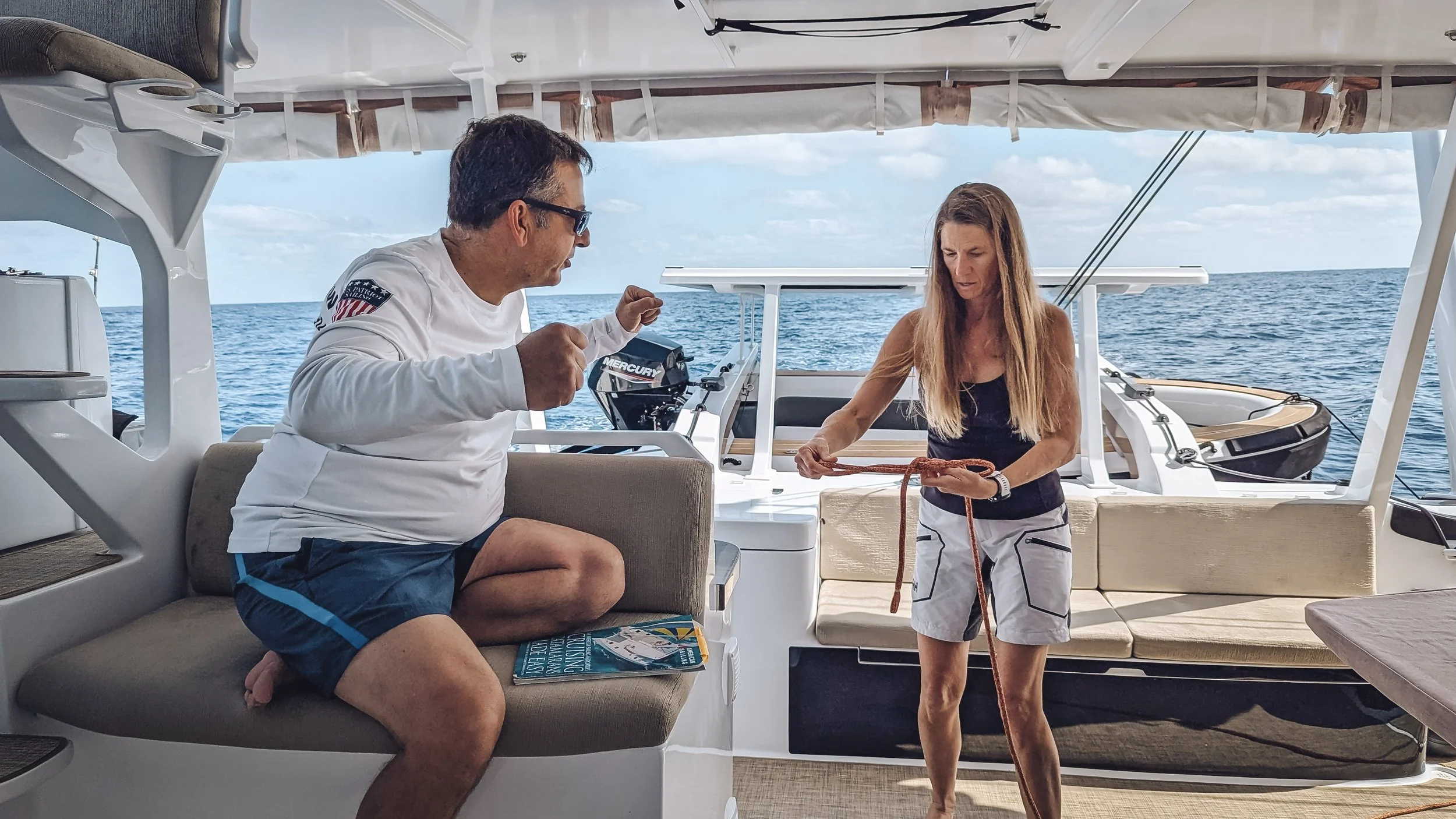
This is exactly why we believe in sail training and real miles of experience. It’s about building the habits that keep you safe and keep you enjoying life on the water, long after the novelty of your new boat wears off.
Where the trimaran fits in
Trimarans are incredible sailing machines. Fast, efficient, and exhilarating. Our trimaran chapter taught us a lot, and quickly, especially about multihull handling and performance.
But when it comes to living aboard, trimarans often come with tradeoffs that surprise people.
Living space:
On many trimarans, you’re still living in monohull-sized accommodations. You get the stability and performance benefits of three hulls, but your home is often a narrow central hull. In day-to-day life, that can feel exactly like living in a monohull.
Our trimaran was a little different, but in general, most cruising tris don’t give you the same true liveaboard footprint that a catamaran does.
The amas:
A lot of people assume “three hulls = tons of space and tons of storage.”
In reality, the amas are usually meant for buoyancy and performance first. Yes, they can be used for storage, but they’re often not meant for heavy loading if you want maximum benefit under sail. Load them up like big storage lockers and you start taking away the very magic you bought the boat for.
Under sail:
In real sea states, you can feel one ama lifting and re-entering wave sets. Sometimes it’s smooth. Sometimes it’s a constant reminder that you’re riding three points on a moving surface. It can feel busy in a way that’s hard to explain until you’ve lived it.
At anchor:
And in a rolly anchorage, a trimaran can surprise you. It can get as uncomfortable as a monohull, except now you can feel that pendulum motion as each of the hulls interact with the waves too.
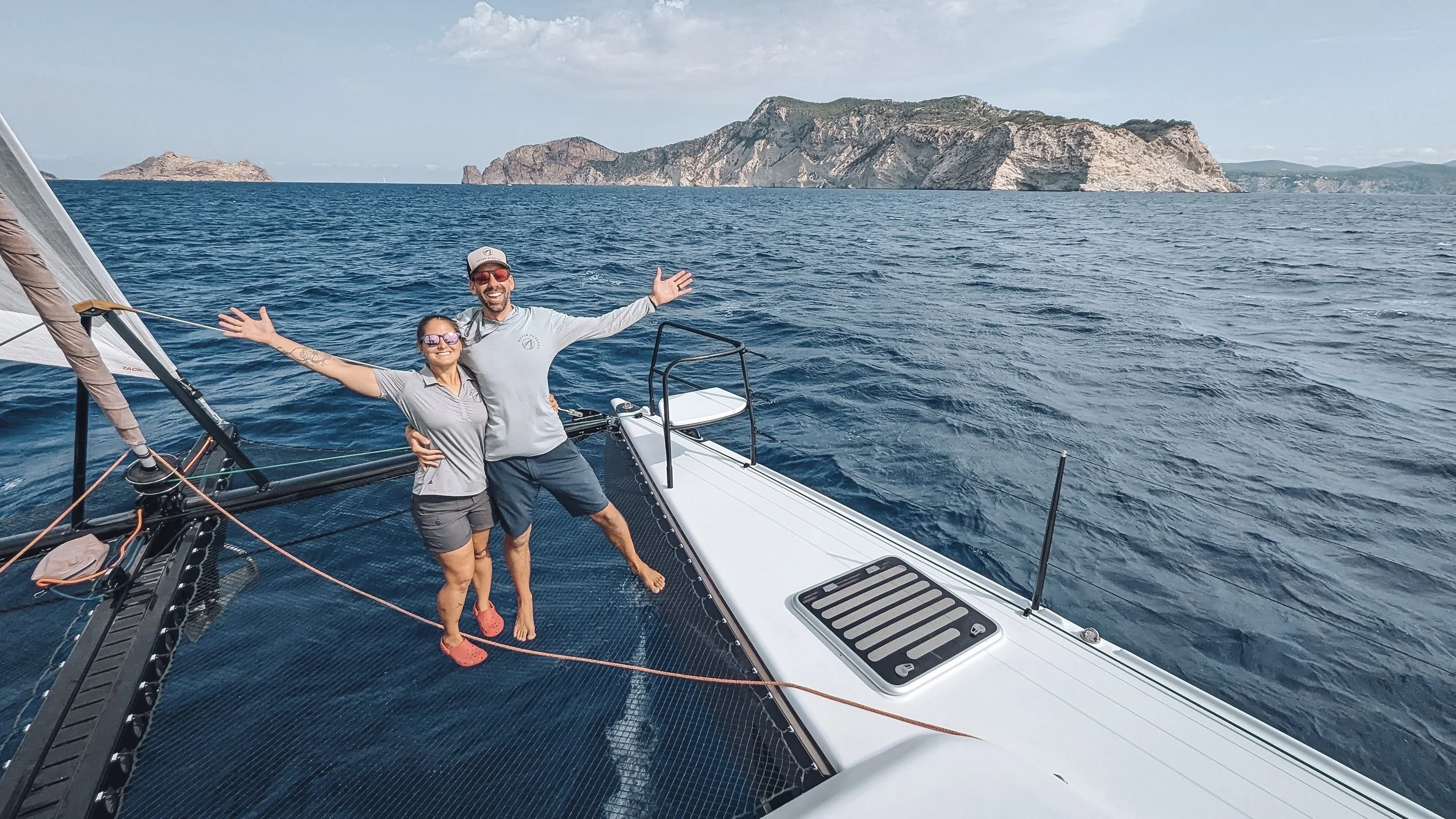
After living aboard a monohull, a trimaran, and a catamaran, here’s Our verdict:
We’ll always love monohulls. Like most sailors, they built our foundation.
We’re grateful for the trimaran chapter, it expanded our understanding of multihulls and made us more intentional sailors.
But if you asked us today, after living aboard all three, what we’d choose for world cruising?
A Catamaran.
Because for the way we actually live and sail, long miles, hands-on seamanship, real days offshore, real nights at anchor, the catamaran gives us the best combination of comfort, capability, and freedom.
And if you’re thinking about making the leap, that’s exactly what we do at Outer Passage: hands-on miles, real conditions, real systems, real seamanship, so you can decide for yourself based on experience, not opinions.
Come sail with us on one of our passages.
- Amanda Seltzer